

A Moment for Mechanics:
Crew Communication and Teamwork
By Anthony Mayer
Section 5.1 of the Collegiate Commissioners Association (CCA) Baseball Umpire’s Manual summarizes mechanics philosophies and basic concepts. (* – see editor’s note below.) It states that umpire mechanics are a series of compromises. Base coverage and mechanics are based on the most likely play to happen next and that the crew needs to work together to cover the entire field of play while limiting the workload of any one umpire.
Here is a play that features our umpire of the year, Matt VanParys leading the way with some flawless mechanics. This is a game that was umpired using the 3-man system, but the philosophies listed above still apply.
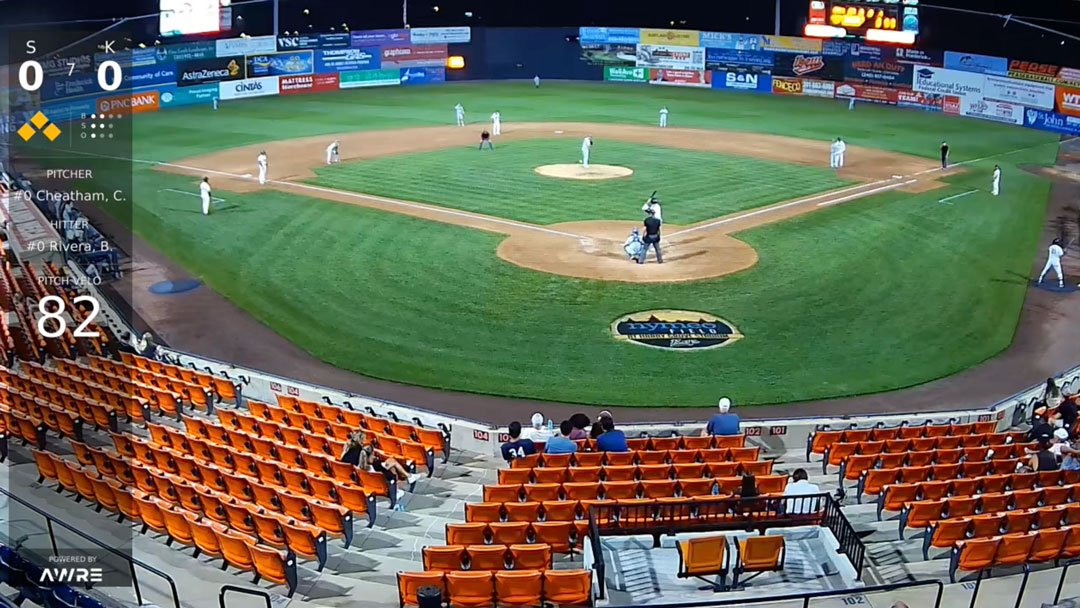
The situation here is bases loaded with one out. What starts out as a routine play turns out to be “not so” routine play that was handled perfectly because of great mechanics and crew teamwork. The play starts with the bases loaded with 1- out. The batter hits a fly ball to center field that is caught for the second out with all three runners tagging up. Our hero starts in the C position lining up his tag while also taking catch/no-catch. The plate umpire and first base umpire both put themselves in position to line up the tag of R1 and R3. Once the catch is made, all umpires understand what comes next and move into position based on what is most likely to happen.
On this play, there is a correct safe call at third base on a very close play. The field umpire in C position was responsible for the catch, the tag up at second base, and the following play going into third base. Without perfect crew mechanics on this play, things could have gone very wrong very quickly.
A final note on this play is the potential timing play even with one out. Had an out been called at third base, the run here does not count as the out would have been recorded prior to the runner reaching home plate. Body language tells me our plate umpire here was very aware of that situation. Umpires commonly only give a pre-pitch “timing play signal” with a runner at second base AND two outs. Again, this play shows us a circumstance where it’s possible to have a timing play despite the fact that there was one out AND the crew doesn’t have the pre-pitch signal reminder about the potential timing play. We simply have to analyze this pre-pitch and be ready.
In conclusion, this play highlights all the concepts that are taught in all umpiring systems. Be aware of potential situations and responsibilities on every play. Work together as a crew and hustle. Great job by Matt and the entire crew on this play!
Editor’s Note: The CCA Baseball Umpire’s Manual is an annual publication written specifically for college baseball. It is also an excellent resource for the high school umpire looking to ascend to work college baseball. Please be advised that there are differences between the college and NFHS mechanics. A proper pre-game is always the best practice to ensure all of the umpires on the crew know their responsibilities and how plays, situations, rotations, etc. will be executed.